Solutions
Reconcile
Automated reconciliation for complex payments data—built for control, clarity and scale
Key Benefits
Reconciliation, under control

Reconcile at scale
Match large, fragmented datasets across multiple sources, without slowing down as volumes grow

Precision you can trust
Improve reconciliation accuracy with data validation, enrichment and high-confidence automated matching

Control your workflows
Run reconciliation as a structured daily control, with defined logic, consistent outputs and clear oversight

Catch issues early
Surface unmatched items, data quality issues and variances as they occur, with clear paths to investigation

Built for payments
Reconciliation software designed for payments data—so teams don’t have to rely on generic tools to handle fragmented, multi-source transaction flows

Simplify complex data
Reconcile across different payment channels, currencies and transaction types without restructuring your data
A controlled reconciliation system for payments data
Key features
Full control
Define your logic
Choose exactly how records should match across systems, with full control over rules, tolerances and transformations
- One-to-one, one-to-many and many-to-many matching
- Apply tolerances for timing, FX and value differences
- Build reusable rule sets across datasets
- Adapt logic to different flows, products or processors

No limits
Reconciliation at scale
Run complex matching logic across large, inconsistent datasets and return structured, usable results in seconds
- Process high-volume datasets across multiple sources
- Handle inconsistent formats, currencies and structures
- Group matched records into clear reconciliation outputs
- Surface unmatched and partial matches instantly
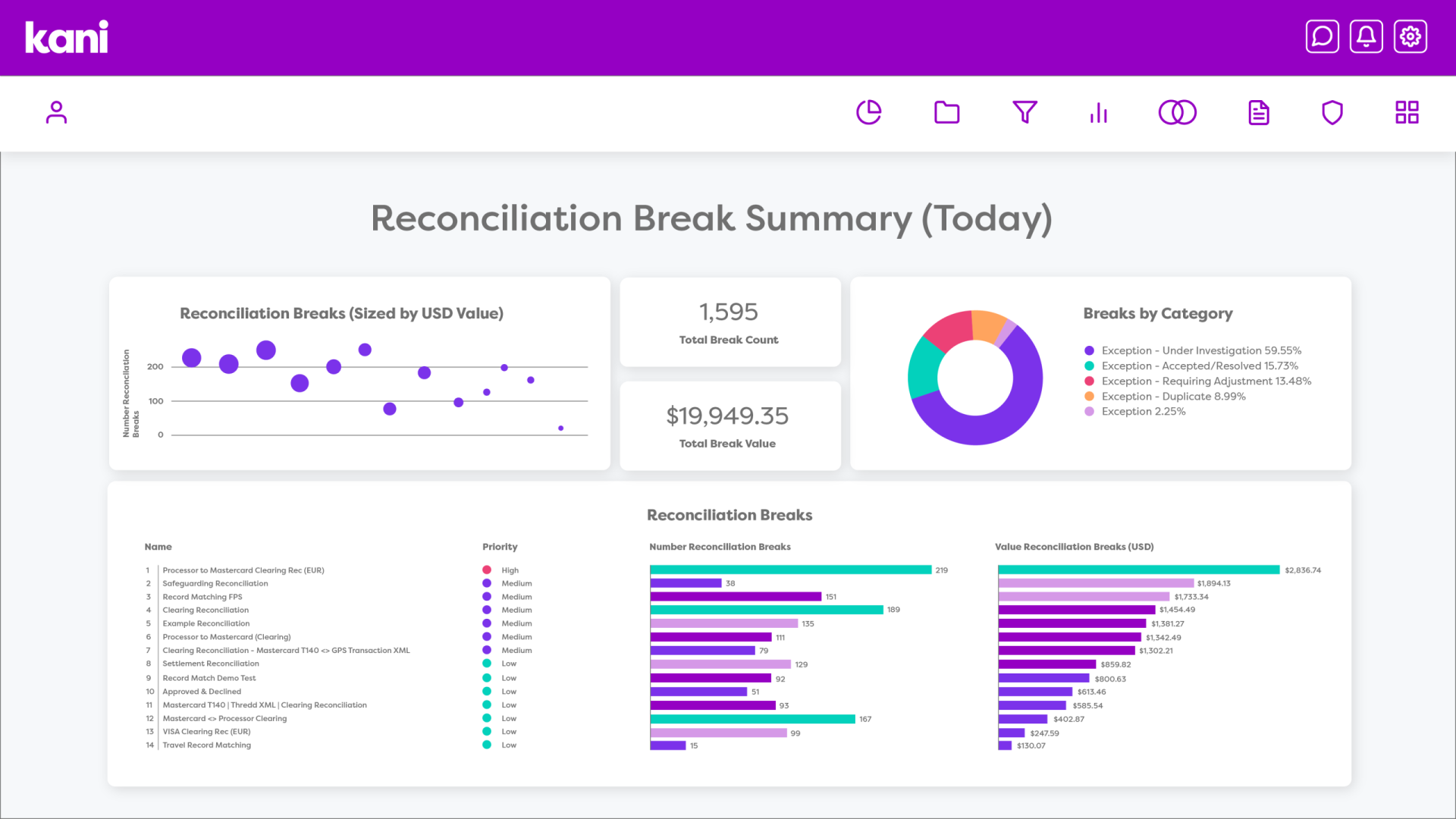
100% visibility
See every exception
Automatically isolate breaks, mismatches and edge cases so teams can investigate quickly and resolve issues with context
- Flag unmatched and partially matched records
- Identify timing differences, FX variances and data issues
- Drill into exceptions with full record-level visibility
- Track resolution workflows and outcomes

Daily control
Reconcile on repeat
Turn reconciliation into a structured, repeatable process with consistent outputs and no dependency on manual intervention
- Save and reuse matching logic across cycles
- Automate recurring reconciliation runs
- Reprocess only new or unresolved records
- Maintain consistency across teams and workflows

Clean inputs
Flawless data built in
Standardise, filter and transform data before matching, so reconciliation runs on clean, consistent inputs
- Create custom columns to normalise data
- Filter datasets by currency, entity or flow
- Resolve formatting inconsistencies across sources
- Reduce noise and improve match accuracy

Audit confidence
Trust every number
Every match, rule and outcome is recorded with full context—so reconciliation stands up to scrutiny without manual justification
- Track matching logic, rules and transformations applied
- Store full metadata for every matched group
- Maintain clear lineage from source to output
- Feed directly into reporting and compliance processes
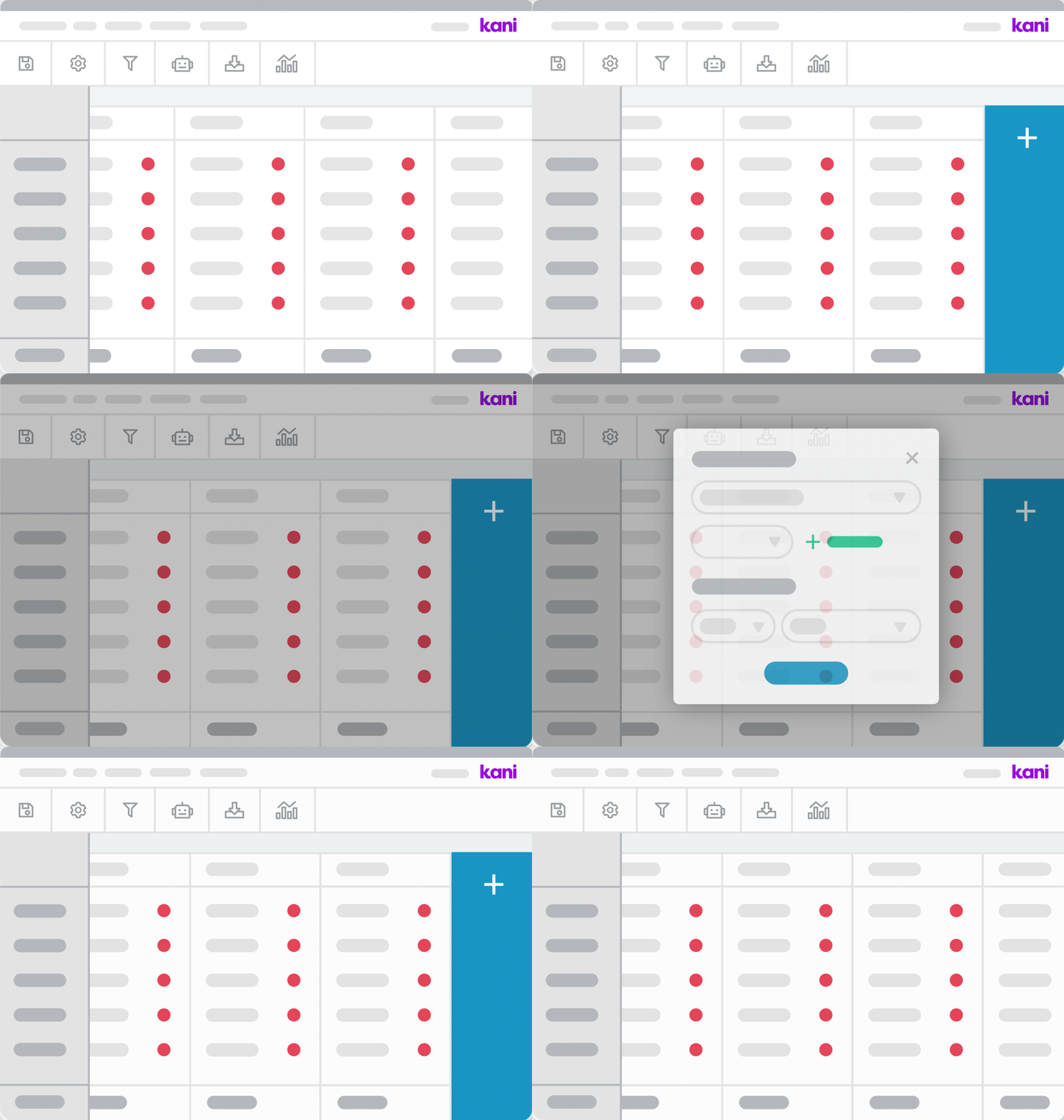
Flexible by design
Reconciliation across the payments ecosystem

Transaction processing
- Card statements to transactions
- Balance to cardholder transactions
- Account reconciliation
- Transaction matching

Finance
- Bank to ledger
- Payment processor to ledger
- Supplier statement reconciliation

Card networks
- Interchange settlement reconciliation
- Disputes & chargebacks reconciliation
- Mastercard & Visa settlement
- Credit card reconciliation

Settlement & clearing
- Payment processor to clearing records
- Transaction settlement reconciliation
- Issuer / acquirer reconciliation
- Cross-border settlement











Powering payments & fintech leaders
Platform security
Learn how we protect your information


Let’s talk
Efficiency is a demo away
See for yourself
Fill in your details and we’ll arrange a demo!
FAQs
What is automated reconciliation?
Automated reconciliation software helps to match financial data across systems without relying on manual spreadsheets. These tools automatically ingest large volumes of data and apply rules-based logic to standardise, match, compare and validate records at scale.
Why is reconciliation in payments so challenging?
Payments companies handle dynamic, high-volume data from banks, PSPs, gateways and internal systems—all with different formats and timings. Complex issues like partial payments, reversals and chargebacks need specialised handling. That’s why a specialised reconciliation solution is essential to manage payments data from end to end.
What’s the best reconciliation software for payments companies?
The right reconciliation software should adapt to your data flows—not the other way around. Look for features built for modern payment flows, like high-volume transaction matching, multi-currency reconciliation, settlement tracking and exception handling workflows.
Who uses a reconciliation tool?
Automated reconciliation tools are most commonly used by finance teams, including financial operations (FinOps), accounting and treasury departments. However, compliance, risk and data operations teams also use it to monitor data accuracy, transaction integrity and financial transparency.
Does reconciliation software help reduce reporting delays?
Yes, reconciliation software reduces reporting delays by identifying mismatches early and streamlining exception workflows. Features like case tracking and data validation allows finance teams to close books faster and report with confidence.
What are the different types of reconciliation?
Common examples include bank reconciliation, account reconciliation, transaction reconciliation and payment reconciliation. Each helps ensure data consistency across systems, supporting accurate reporting, settlement tracking and financial integrity.
What’s the benefit of automated reconciliation?
Automated reconciliation replaces spreadsheets with software built to handle high transaction volumes, ensure data accuracy and manage exceptions via dedicated workflows. It saves time, reduces errors and scales effortlessly with transaction volumes. Automation also helps improve governance and auditability, giving finance teams more control over their data.
How is reconciliation software different than ERP tools?
ERP systems manage broad business processes like accounting, procurement and inventory. While they may offer basic reconciliation features, they aren’t specialised in financial matching or complex data. Specialised software offers accurate, automated reconciliation even with multi-source financial inputs and large data volumes.
Related Insights


